Verified Q4 2025 Ticket Sales Performance
Why similar operators produced radically different outcomes in Q4.
Based on verified ticket sales and observed checkout efficiency from live U.S. theaters.
The Economic Divide
In Q4, operators with similar demand produced sharply different outcomes.
The financial gap shaping U.S. spending is now showing up directly in live-entertainment outcomes.
Key Indicators
• Nearly half of U.S. consumer spending now comes from households earning $250,000 or more.
• Meta ad costs climbed roughly 21% year over year, widening the gap between visibility and profitability.
• Consumer confidence softened while recreation and entertainment spend held.
Premium audiences are still buying. Rising costs are changing where margin comes from.
The separation appeared before checkout.
In Q4, operators with cleaner buying paths held their ground while others stalled despite similar demand.
Operational Impact
Every new visitor costs more and buys less. In Q4, growth diverged where refinement already existed.
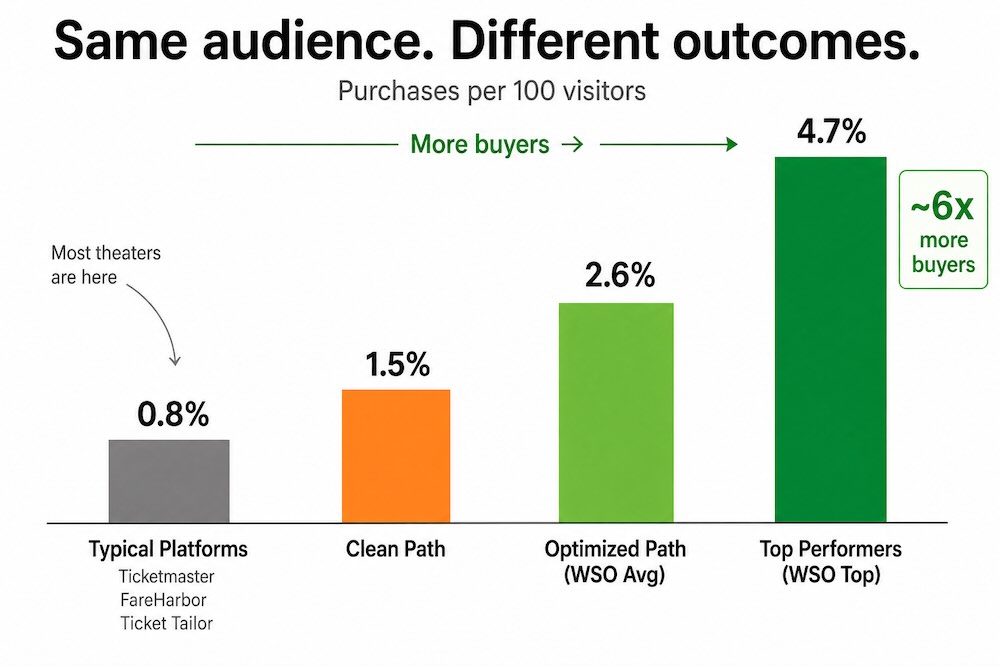
An efficiency increase from 1.3% to 2.6% roughly doubles sales from the same visitor volume and materially lowers effective cost per sale.
Q1 Outlook
The next quarter will reward speed, clarity, and operational precision. Premium audiences will keep spending, but competition for attention will intensify.
• Meta costs continue climbing, widening the gap between traffic and profitability.
• Buyer attention is compressing; last-minute conversions depend on frictionless paths.
• Real-time measurement and automation will separate steady growth from stalled performance.
Producers converting more buyers from the same traffic will continue to outperform as conditions tighten.
The performance gap between high- and low-efficiency theaters is likely to widen.
The biggest risk is assuming last year’s systems will perform the same under higher noise.
The Efficiency Divide
What follows shows what separated outcomes when demand alone couldn't.
In Q4, similar demand produced very different outcomes once paths and measurement were compared side by side.
Most operators rate their efficiency higher than buyer behavior supports. In Q4, systems consistently produced lower results than self-estimates suggested.
Demand did not disappear.
The differences showed up in conversion behavior.
As acquisition costs rose and attention compressed, theaters with clearer buying paths continued converting while others stalled with the same traffic.
The separation appeared earlier than most operators realized, and self-estimates commonly drifted above measured behavior.
Market Benchmarks
At this range, outcomes diverged due to baseline efficiency already embedded in the system, not traffic volume or ad spend.
A typical theater moving just one category to the right sees a meaningful lift in ticket sales without increasing traffic.
Self-assessment commonly overestimates efficiency by approximately one full category.
Modeled from verified ticket sales, isolating checkout performance before any marketing, pricing, or traffic changes.
Without measurement, most operators misread what the next quarter is actually responding to.
Efficiency in Practice
These are early indicators. They reveal momentum before revenue outcomes are obvious.
RPS is one of the clearest early indicators of buyer momentum.
Here’s how efficiency is showing up in verified theaters this quarter:
• Average Order Value (AOV): $142
• Revenue per Session (RPS): $3.41
• Sales Efficiency (ECR): 2.6% average | 4.7% top performer
Even small efficiency gains create large divides.
Early measurement correlates strongly with sustained performance.
A 0.5% ECR increase can represent tens or hundreds of thousands in additional annual revenue, depending on traffic and ticket value.
Interpretation: In Q4, the winners are not the theaters buying the most traffic. It’s the theaters converting more buyers from the same traffic.
Across the network, Sales Efficiency ranges from 1.3% to 4.7%. Most platforms stay between 0.8% and 1.5%. That gap is real revenue left behind.
Producer Insights
The same performance patterns appeared across independent, destination, and high-volume theaters.
“We didn’t change our ads or pricing, just simplified checkout and watched sales jump.”
-West Coast Producer
Because removing friction early preserves momentum. And momentum is the strongest predictor of completed sales.
Shorter paths consistently correlate with stronger buyer momentum across the WSO network.
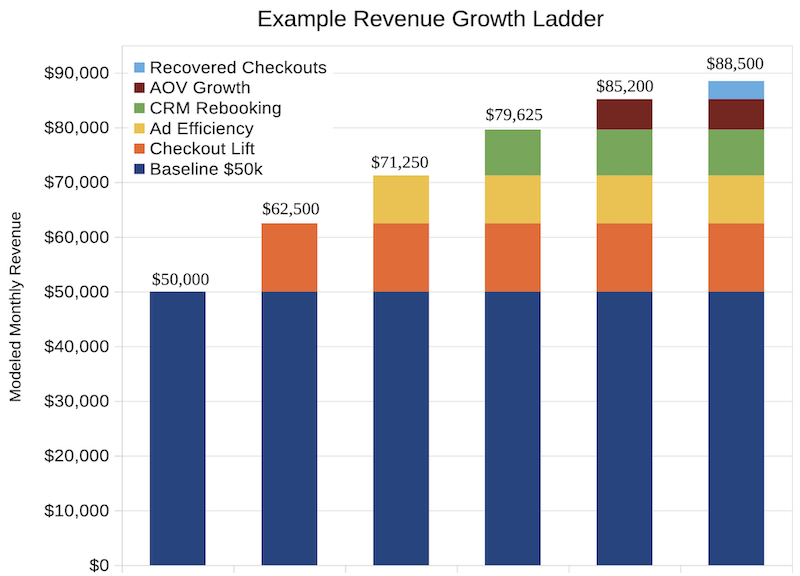
CRM automations and cart recovery now drive 8-10% of monthly sales in several theaters.
These quiet corrections remove friction and create predictable, repeatable growth.
WSO Verified Network Performance Snapshot
Measured across live theaters in different markets using real ticket sales data.
Across the network:
• Sales Efficiency consistently ranges from 1.3% to 4.7%
• Most legacy platforms remain between 0.8% and 1.5%
• Gains appear before ads, pricing, or show changes
• This pattern repeats regardless of city, venue size, or traffic source
Data reviewed quarterly from tracked ticket sales inside active theaters.
Why It Matters
Observed demand was sufficient. The divergence appeared before most operators realized where it originated.
Theaters that see where momentum slows adjust early.
Those that don’t see it early react late or fix the wrong problem.
In high-noise quarters, clarity determines who adjusts early and who reacts too late.
Methodology Note
This report is built from tracked ticket sales and reviewed quarterly so performance claims stay measurable and falsifiable.
The goal is not storytelling. It is to isolate checkout performance and reveal where revenue is being captured or lost under real market conditions.
That approach keeps the conclusions grounded in observed outcomes, not platform promises, even without interpretation or narrative framing.
Why This Exists
Most ticketing systems optimize for transactions issued. This work focuses on measuring completion drivers.
Once performance is visible, decisions stop being reactive.
That clarity is what most operators didn't have going into Q4.
Verify Sales Efficiency
Most theaters entered Q4 without knowing their actual baseline efficiency.
Spotlight reveals the number your system was already producing during this quarter.
If this raised questions, Spotlight shows what your system actually produced during Q4.
Nothing installed. Nothing modified. Works with your current platform.
If you think you already know your numbers, Spotlight will confirm it.
Data verified from live WSO theaters. Figures are verified from tracked ticket sales and reviewed quarterly for accuracy. Results vary by market and execution, but efficiency always compounds.